Psychological Safety: The Missing Ingredient in Great Teams


By Dr. Cyril Davis, DNP, PMHNP-BC
In every workplace, organization, healthcare setting, classroom, or community group, leaders often focus on performance, productivity, communication, and outcomes. These are important goals. Yet many teams continue to struggle despite having talented individuals, strong resources, and clear objectives.
The missing ingredient is often psychological safety.
Psychological safety is the belief that individuals can speak up, ask questions, share concerns, admit mistakes, and offer ideas without fear of embarrassment, humiliation, punishment, or retaliation. It is not about lowering standards or avoiding accountability. Instead, it is about creating an environment where people feel safe enough to contribute fully.
When psychological safety is present, people are more likely to collaborate, innovate, learn, and grow. When it is absent, silence often replaces engagement.
The Cost of Staying Silent
Most people have experienced situations where they wanted to speak up but chose not to.
Perhaps they noticed a potential problem but worried about how others would react. Maybe they had a suggestion but assumed it would not be welcomed. Some may have feared appearing incompetent if they asked a question or admitted they did not know something.
Over time, these moments of silence can become part of an organization's culture.
The consequences can be significant:
• Important information goes unshared.
• Problems remain unresolved.
• Mistakes are repeated.
• Innovation slows.
• Employee engagement declines.
• Burnout increases.
• Trust erodes.
In healthcare, these consequences can directly affect patient safety. In business, they can impact performance and retention. In families and communities, they can damage relationships and connections.
My Perspective on Psychological Safety
My interest in psychological safety comes from multiple experiences throughout my life.
Before entering healthcare, I spent nearly fifteen years serving in local and federal law enforcement. I later worked as an emergency department nurse and now serve as a psychiatric mental health nurse practitioner and healthcare leader.
Across every profession, I observed the same reality: people perform best when they feel respected, supported, and heard.
I have also experienced firsthand how adversity can reshape a person's understanding of strength. Following a traumatic brain injury that ended my law enforcement career, I learned that resilience is not about carrying everything alone. It is about having the courage to seek support, ask questions, and continue moving forward despite challenges.
That lesson continues to influence how I view leadership, teamwork, and mental health today.
Psychological Safety Is Not Comfort
One of the biggest misconceptions about psychological safety is that it means everyone must always feel comfortable.
In reality, growth often requires discomfort.
Healthy teams engage in difficult conversations. They address problems directly. They challenge assumptions and provide constructive feedback.
Psychological safety does not eliminate accountability. It creates the conditions necessary for accountability to be effective.
When people trust that they will be treated with respect, they are more willing to participate in honest conversations. They become more open to learning, feedback, and improvement.
The Connection Between Mental Health and Team Performance
As a psychiatric mental health provider, I frequently see the effects of workplace stress, burnout, and chronic pressure.
While psychological safety is not the same thing as mental health, the two are closely connected.
Environments characterized by fear, blame, and poor communication often contribute to stress and emotional exhaustion. Conversely, environments that foster trust, belonging, and open communication can support resilience and well-being.
People want to know that their voices matter.
They want to know that asking for help will not be viewed as a weakness.
They want to know that mistakes can become opportunities for learning rather than sources of shame.
These needs are fundamentally human.
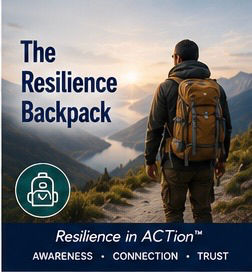
The ACT Framework for Psychological Safety™
As I continue studying psychological safety, leadership, and resilience, I have developed a simple framework that helps guide my thinking.
ACT stands for:
Awareness
Connection
Trust
Awareness involves recognizing barriers that prevent people from speaking openly.
Connection involves creating meaningful relationships through empathy, listening, and shared purpose.
Trust develops when leaders consistently demonstrate respect, transparency, accountability, and support.
When awareness, connection, and trust work together, psychological safety can flourish.
What Leaders Can Do Today
Building psychological safety does not require a major organizational overhaul.
Small actions often have the greatest impact.
Leaders can:
• Ask more questions.
• Listen without immediately judging.
• Acknowledge mistakes openly.
• Encourage diverse perspectives.
• Express appreciation for feedback.
• Respond with curiosity rather than defensiveness.
• Create opportunities for meaningful dialogue.
Every interaction either strengthens or weakens psychological safety.
Final Thoughts
Great teams are not built solely on talent, intelligence, or technical expertise.
They are built on trust.
When people feel safe enough to speak up, ask for help, share ideas, and learn from mistakes, organizations become stronger, more resilient, and more effective.
Psychological safety may not always be visible, but its impact is profound.
As leaders, educators, healthcare professionals, and community members, we each have the opportunity to create environments where people can speak up, grow, and thrive.
Because at the end of the day, psychological safety is not just about performance.
It is about people.


Comments